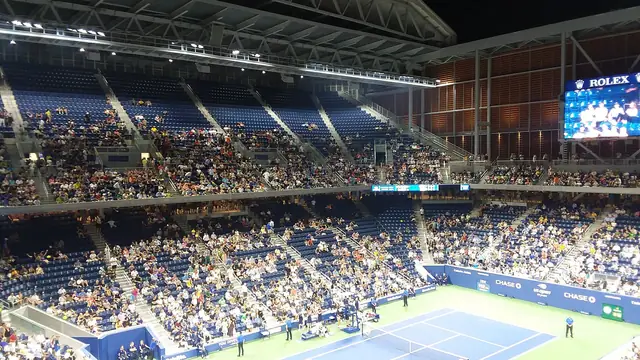
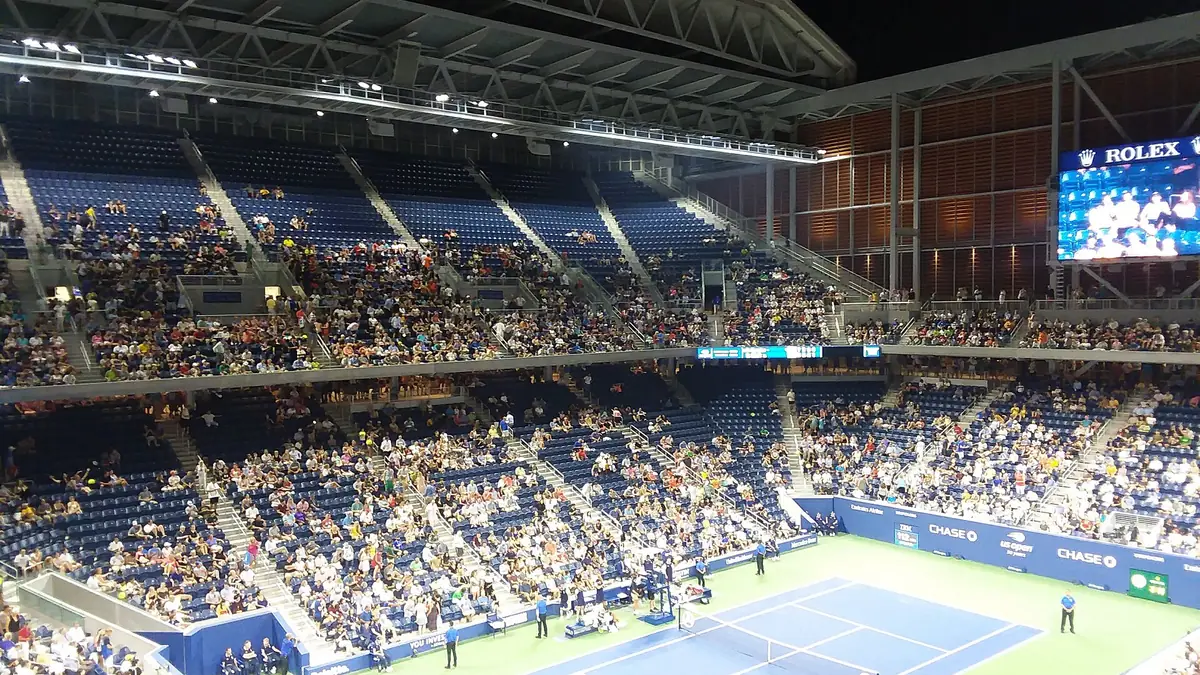

Looking for section numbers and the best seats by level? See the Louis Armstrong Stadium Seating Chart.
Upcoming events at Louis Armstrong Stadium
No upcoming events are scheduled at Louis Armstrong Stadium at this time, so there are no tickets to list. New events will appear here as soon as they are announced and tickets go on sale. In the meantime, the guide below covers what to know before you buy.
The US Open's second stadium, with a roof
Louis Armstrong Stadium is the second-largest court at the USTA Billie Jean King National Tennis Center in Flushing Meadows–Corona Park, Queens, and the US Open's No. 2 show court behind Arthur Ashe Stadium. It seats 14,053 (reports at its opening rounded this to about 14,000) and it does have a roof: a retractable roof that closes for rain, so scheduled matches here can continue when the outer courts stop.
The current stadium opened on August 22, 2018, replacing an older Armstrong stadium on the same site. The first official match, Simona Halep against Kaia Kanepi, was played on August 27, 2018. Its main tenant is the US Open, held over two weeks from late August into early September, with a qualifying and Fan Week period before the main draw. The building has also hosted boxing (in July 2025) and professional wrestling outside the tournament.
Two levels: reserved below, general admission above
The stadium's layout explains most of what a ticket buyer needs to know. There are two seating levels:
- The lower bowl holds roughly 6,400 to 6,600 reserved seats (sources differ slightly). These require a Louis Armstrong Stadium ticket for that session.
- The upper bowl holds roughly 7,000 to 7,400 seats that have traditionally been general admission (first come, first served), open to grounds-pass holders and Arthur Ashe ticket holders.
Starting in 2024, the US Open converted several upper-level sections that had been general admission to reserved seating, so the general admission share is smaller than when the stadium opened. Check the seat map at purchase to see whether a listing is a reserved seat or general admission.
An Armstrong reserved ticket also includes first-come, first-served access to the general admission areas of the Grandstand and the field courts. A grounds pass does not admit you to Arthur Ashe Stadium at all.
Which Armstrong seats are worth buying
Lower bowl, end vs. side
Tennis is best watched from behind the baseline, where you can read the depth and spin of each shot. Lower-bowl seats at either end, a dozen or more rows up, give the classic broadcast-style view. Sideline seats near the net are closer to the players' chairs and feel more intimate, but you turn your head on every rally.
The upper bowl
Because Armstrong is about half the size of Ashe, its upper level is far closer to the court than Ashe's upper deck. Many fans consider an Armstrong upper-level seat the best value of the tournament, especially in the first week, when top seeds are regularly scheduled here.
Sun and shade at day sessions
Day-session play typically starts in late morning, so the sun pattern runs opposite to an evening sporting event. The west side starts the first match in the sun and moves into shade after a few sets. If you are sensitive to heat, bring sun protection for the opening match or look for seats that shade early.
Seats to approach with care
- Low sideline rows near the players' chairs put officials, ball crew and the chair umpire's stand in your line of sight for part of the court.
- General admission for a marquee match can fill well before a marquee match; arrive early if you are counting on a grounds-pass seat.
Day sessions, night sessions and demand
The US Open sells separate day and evening sessions. Day sessions run from the park's opening until about 6 p.m. and include several matches across the courts. Evening sessions run from about 6 p.m. to close and are held only in Arthur Ashe and Louis Armstrong stadiums, with fewer matches and more concentrated crowds.
Demand at Armstrong follows the draw. The first week, when the field is largest and top players are spread across Ashe and Armstrong, is when Armstrong tickets offer the most tennis for the money. Weekend sessions and evening sessions with a popular local or top-seeded player draw the most demand. As the tournament narrows in the second week, more of the marquee singles matches move to Ashe. Prices on the resale market move with the order of play, which is usually released the day before.
How the roof works
The roof is the stadium's defining feature. Armstrong was billed as the first tennis stadium with a roof that is also naturally ventilated: openings on the north and south sides let outside air flow through even when the roof is closed, so the building needs no pre-conditioning before the roof moves.
Closing times are reported differently. At its opening, the tournament said the roof would close in less than five minutes; the US Open's 2018 roof protocol listed about seven minutes to close and fully seal. Under that protocol, the tournament referee decides when to close it, and it is used only for rain or a strong chance of rain, not for heat or sun. Once closed, play continues, and the referee can reopen it at any point.
For a ticket buyer, the roof means a reserved Armstrong seat is close to rain-proof, a real advantage over the outer courts during a stormy New York late summer.
Getting to the tennis center
Public transit is the practical way in. The NYC Subway and the Long Island Rail Road's Port Washington Branch both stop at Mets–Willets Point, a short walk from the tennis center's gates. Driving means competing with tournament traffic and, on some dates, Mets home games at nearby Citi Field.
Allow time for security screening at the entrance, which can back up in late morning and before evening sessions. The US Open publishes a bag-size limit and a list of prohibited items each year; review the tournament's official site before you go, since the rules can change from year to year.
From the Singer Bowl to a new stadium
The name has a long history at this site. The original Louis Armstrong Stadium was built from the Singer Bowl, a venue from the 1964 New York World's Fair, and served as the US Open's main stadium from 1978 until Arthur Ashe Stadium opened in 1997, a run of nearly two decades as center court. By the end it held about 10,500 people. The stadium is named for Louis Armstrong, the jazz trumpeter and singer who lived in nearby Corona, Queens.
The old stadium was demolished after the 2016 tournament. Its replacement, designed by Rossetti, cost about 200 million dollars and was the last major piece of a roughly 600 million dollar, five-year renovation of the tennis center, which also added a roof over Arthur Ashe Stadium in 2016. The terra cotta exterior was chosen to relate to the older brick buildings on the grounds.
Frequently asked questions
What is the capacity of Louis Armstrong Stadium?
Louis Armstrong Stadium seats 14,053, often rounded to about 14,000. Roughly half the seats are reserved in the lower bowl and half are in the upper bowl.
Does Louis Armstrong Stadium have a roof?
Yes. It has a retractable roof that closes for rain or a strong chance of rain, not for heat. It is naturally ventilated, so air keeps moving through the stadium even when the roof is closed.
Can a grounds pass get you into Louis Armstrong Stadium?
A grounds pass gives first-come, first-served access to the general admission seats in Armstrong's upper level. Since 2024 some upper-level sections have been reserved, so general admission space is more limited than before.
Is Louis Armstrong Stadium the same as Arthur Ashe Stadium?
No. Arthur Ashe Stadium is the US Open's main and largest court; Louis Armstrong Stadium is the second show court. An Ashe ticket includes general admission to Armstrong, but a grounds pass does not admit you to Ashe.
How do you get to Louis Armstrong Stadium?
Take the NYC Subway or the LIRR Port Washington Branch to Mets–Willets Point, then walk to the USTA Billie Jean King National Tennis Center.
Is Louis Armstrong Stadium air-conditioned?
No. It is naturally ventilated rather than air-conditioned: overlapping terra-cotta louvers, a perforated seating bowl and open concourses move air through the stadium, even when the retractable roof is closed. Dress for outdoor temperatures.