What World and Reggae covers
This hub covers three overlapping scenes. Reggae, the genre that came out of Jamaica in the late 1960s, and its American offshoot reggae rock, a mix of reggae grooves with rock, punk and hip-hop that grew up in California beach towns. Afrobeats, the umbrella term for the West African pop that developed in Nigeria, Ghana and the UK in the 2000s and 2010s. And world music in the broad sense: Cuban son, African jazz and other global traditions that reach US stages through tours, festivals and theater.
For a ticket buyer, the scenes behave differently. Reggae rock is a summer amphitheater business built on package tours with several bands on one bill. Afrobeats has moved from clubs to arenas and stadiums in a few years, with demand concentrated on a handful of big-city dates. World music turns up in concert halls, festival lineups and, increasingly, on Broadway.
The reggae and reggae-rock summer circuit
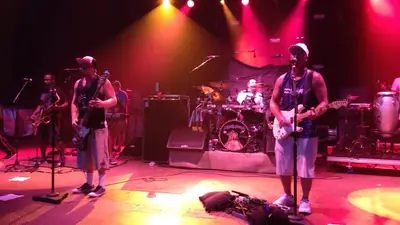
The word reggae entered popular music in 1968 with Toots and the Maytals' single "Do the Reggay," and Bob Marley's Legend compilation, released in 1984, carried the genre around the world. In the United States today, the most active touring wing is reggae rock, and it lives outdoors.
- Slightly Stoopid: the Ocean Beach, San Diego, band formed in 1994 headlines a named summer package tour most years, such as the Step Into the Sun Summer Tour in 2025 with Iration and Little Stranger, closing each night with an extended, horn-driven set.
- Rebelution: formed in 2004 by University of California, Santa Barbara students in the college town of Isla Vista.
- SOJA: the Arlington, Virginia, band formed in 1997, whose 2012 album Strength to Survive topped the Billboard Reggae Album chart.
The genre's flagship gathering is the California Roots Music and Arts Festival (Cali Roots), founded in 2010 and held over Memorial Day weekend at the Monterey County Fairgrounds. The 2025 edition drew nearly 40,000 people over three days for 42 acts, including Slightly Stoopid, Steel Pulse, Matisyahu and Common Kings. The outdoor format fits a national pattern: the National Endowment for the Arts found that parks, pavilions and amphitheaters drew more arts attendees, 17 percent of US adults, than any other venue type in 2022 (NEA, Survey of Public Participation in the Arts).
Afrobeats moves into arenas and stadiums
Afrobeats is the fastest-growing part of this hub. Its biggest stars now book the same buildings as US pop headliners.
- Burna Boy: the Nigerian singer won the Grammy for Best World Music Album for Twice as Tall, and on July 8, 2023, he became the first African artist to headline and sell out a US stadium, playing to about 41,800 people at Citi Field in New York.
- Wizkid: the Lagos singer reached a global audience in 2016 as a featured artist on "One Dance," which went to No. 1 on the Billboard Hot 100.
- Tems: the Nigerian singer won the Grammy for Best African Music Performance in 2025.
A headline night on that scale is treated as an event: fans travel in from around the region, and the general admission floor fills with people who came to dance.
World music on festival stages and Broadway
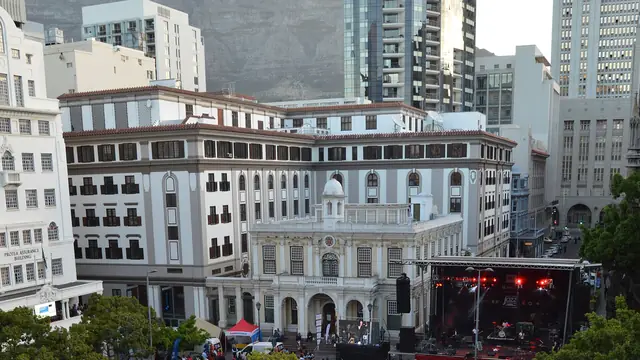
Global music also reaches buyers through festivals and theater. The New Orleans Jazz Fest includes Afro-Caribbean music in its lineup and the Congo Square African Marketplace among its craft areas. The Cape Town International Jazz Festival, held since 2000, is the largest jazz festival in Africa. Latin pop, reggaeton and regional Mexican music have their own guide in the Latin Music hub.
On Broadway, Buena Vista Social Club tells the story of the Cuban musicians behind the 1997 album of the same name, with a score sung entirely in Spanish in the styles of son, danzón and bolero. It opened at the Schoenfeld Theatre on March 19, 2025, won four competitive Tony Awards plus a special Tony honoring its onstage band, and its cast album won the 2026 Grammy for Best Musical Theater Album. Like any Broadway show, it sells by performance, with weekend evenings and holiday weeks moving first.
How reggae and Afrobeats tickets behave
- Package bills spread demand. A reggae-rock tour stacks two or three supporting acts under the headliner, so fans of every band on the bill compete for the same pit and front pavilion seats.
- Signup lists and presales come first. Slightly Stoopid, for example, uses a signup list for updates and presale access, and venue and promoter presales usually precede the general on-sale.
- Hometown and weekend dates sell first. San Diego-area dates carry hometown demand for Slightly Stoopid, and Friday and Saturday summer dates move ahead of weeknights.
- Lawns hold inventory longest. Big amphitheater lawns often have tickets close to show day, while pit and front sections go early.
- Stadium Afrobeats dates are events. A single headline night in a major city draws regional travel, so the floor and lower bowl tighten first and the upper deck holds inventory longer.
Resale prices for all of these shows can sit above or below face value and move as the date approaches. GoodSeats orders include guaranteed entry.
Where to sit or stand
- Amphitheater pit: the closest view of the horns and percussion, and the liveliest crowd. If the pit is general admission, arrive during the support sets to claim a spot.
- Center pavilion seats: the best balance of sound and sightline for a long multi-band bill, and a roof if the weather turns. Seats near the soundboard hear the cleanest mix.
- The lawn: for reggae rock, the lawn is not a compromise. Much of the audience treats it as the main event, with room to move. Check the venue's blanket and low-chair rules.
- Stadium or arena floor for Afrobeats: buy the floor only if you plan to dance for hours. A lower-level seat facing the stage sees the choreography and screens better and lets you sit between sets.
- Festival fields: at Cali Roots and similar events, a spot near the soundboard or toward the sides keeps sightlines open without the crush at the front rail.
Tips for first-timers
- Check the full bill and set times. On a package tour the headliner may not start until late, and the openers are often worth arriving for.
- Dress for outdoors. Summer sheds and fairgrounds mean sun in the afternoon and cooler air after dark.
- Learn the venue rules. Chair, blanket, bag and smoking policies vary widely by amphitheater; check the venue's current policy before you go.
- Plan the ride out. Amphitheater lots and festival grounds empty slowly, so set a meeting point and give yourself time after the encore.
Frequently asked questions
What is the difference between reggae and reggae rock?
Reggae is the Jamaican genre that emerged in the late 1960s. Reggae rock is a largely Californian blend of reggae rhythms with rock, punk and hip-hop, played by bands such as Slightly Stoopid, Rebelution and SOJA.
What is the biggest reggae festival in the US?
The California Roots Music and Arts Festival, held over Memorial Day weekend at the Monterey County Fairgrounds, is one of the largest. Its 2025 edition drew nearly 40,000 people over three days.
Has an Afrobeats artist sold out a US stadium?
Yes. Burna Boy sold out Citi Field in New York on July 8, 2023, the first African artist to headline and sell out a US stadium.
Where should I sit for a reggae-rock amphitheater show?
The pit is best for energy and closeness, center pavilion seats for sound and a guaranteed seat, and the lawn for space to move. Many fans of the genre choose the lawn on purpose.
Sources
- Wikipedia: Reggae
- Wikipedia: Afrobeats
- NEA, Arts Participation Patterns in 2022 (dossier GS-004)
- Wikipedia: Rebelution (band)
- Wikipedia: SOJA
- Wikipedia: California Roots Music and Arts Festival
- Lookout Santa Cruz: Cali Roots draws nearly 40,000 on Memorial Day weekend (2025)
- Wikipedia: Burna Boy
- OkayAfrica: Burna Boy makes history as first African artist to sell out a US stadium
- Wikipedia: Wizkid
- Wikipedia: Buena Vista Social Club (musical)
- Broadway.com: Buena Vista Social Club by the numbers