

What counts as dance on this page
This page covers live dance performance: modern and contemporary companies, the Alvin Ailey American Dance Theater, dance festivals and touring dance spectacles such as Irish step-dance shows. It does not cover dance music; for DJs and electronic acts, see EDM and Electronic. Classical ballet has its own hub, Ballet.
Dance is organized around companies rather than single productions. A company builds a repertory (a body of works it keeps in performance), plays a home season of one to several weeks, and spends much of the rest of the year on tour, often a few nights per city. Touring spectacles work more like a concert tour: one show, sometimes several companies of it, moving through theaters on a set route.
The audience is smaller than for theater or concerts. In the National Endowment for the Arts survey for the 12 months ending July 2022, 3.3 percent of US adults attended a dance performance other than ballet, down from 6.3 percent in 2017 (NEA, Arts Participation Patterns in 2022). That survey period still carried pandemic effects, but it explains why most dance dates have seats available until the final week.
Alvin Ailey American Dance Theater
Alvin Ailey founded his company in 1958, and in 1960 he premiered Revelations, the suite set to African American spirituals that remains its signature work. The company has been described as the largest modern dance company in the United States, keeps nearly 300 works by more than 100 choreographers in its active repertory, and has been recognized by Congress as a cultural ambassador. Its headquarters, the Joan Weill Center for Dance on West 55th Street in Manhattan, has been home since 2005.
The company's New York season at New York City Center has become a holiday tradition; the 2025–26 season ran from December 3 to January 4. City Center seats 2,257 across an orchestra, a mezzanine and two balconies. Programs that include Revelations are the most requested, and the weekends closest to the holidays sell first. As of July 1, 2025, Alicia Graf Mack leads the company as artistic director. Current season and tour dates are on the Alvin Ailey site.
Modern companies, festivals and dance houses
Beyond Ailey, a cluster of long-running companies and dedicated venues anchors the scene, much of it in New York.
- Martha Graham Dance Company, founded in 1926, is the oldest dance company in the United States and the oldest integrated one.
- The Joyce Theater in Chelsea opened as a dance house in 1982. Its 472 seats sit on one steeply raked level, so the sightlines are strong from nearly every row. It presents visiting companies across the year.
- New York City Center hosts the Fall for Dance Festival each autumn, a mixed program of several companies per night that works as a sampler.
- Jacob's Pillow, founded in 1931 by Ted Shawn in Becket, Massachusetts, runs a summer festival across indoor theaters and the outdoor Henry J. Leir Stage. It was designated a National Historic Landmark in 2003, the only dance organization in the country with that status, and its rebuilt Doris Duke stage opened on July 9, 2025.
Outside New York, dance companies usually appear on a performing arts center's presenting series (a season of visiting acts the venue books), so check your local center's dance listings rather than waiting for a tour announcement. The New York City guide covers the city's other venues.
Touring dance shows
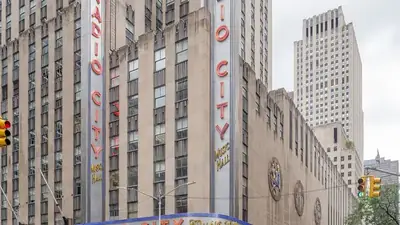
The largest dance audiences in theaters come from touring spectacles. Riverdance began as the interval act at the Eurovision Song Contest on April 30, 1994, opened as a full stage show at the Point Theatre in Dublin on February 9, 1995, and made its US debut with eight sold-out shows at Radio City Music Hall in March 1996. By 2023 it had given more than 15,000 performances in 49 countries. Lord of the Dance, created by Michael Flatley, premiered in Dublin on July 26, 1996, and has toured internationally with multiple troupes.
These shows play large theaters and performing arts centers for one to a few nights per city, so demand concentrates fast. Weekend evenings go first; a weekday show on the same visit usually has better seat choice. Every order on Good Seats is backed by a 100% guarantee.
Where to sit for dance
Dance is about the whole body and the whole stage floor, so height matters more than closeness.
- Front orchestra rows: in most theaters the stage sits above eye level for the first several rows. You lose the feet and any floor work, which is a real loss in modern dance, where dancers spend time on the ground.
- Middle orchestra, center: the rake (the upward slope of the seating) lifts you enough to see the floor while keeping facial expression. The best all-around choice.
- Front mezzanine or first balcony, center: the best seats for ensemble works and for choreography built on patterns and formations. At New York City Center, the front mezzanine is a strong pick.
- Side sections: dancers enter from the wings, and seats far to one side miss part of the stage on that side. Choose a seat closer to center over one a few rows nearer.
- Irish step-dance shows: the footwork is the point. A seat slightly raised, such as the rear orchestra or front mezzanine, shows feet better than the first rows.
In a small, steeply raked house such as The Joyce, nearly every seat works, and the first rows are much closer than in a large hall.
How dance tickets sell
Dance companies sell to subscribers and members first, then release single tickets; presenting venues sell a dance series as a package before individual dates. Demand rises for holiday seasons, company anniversaries, premieres and programs with a signature work such as Revelations. Mixed programs on weeknights usually offer the widest choice. Dance, opera and theater together accounted for 11.8 percent of a projected 2024 total for US online ticket sales, according to a Congressional Research Service report citing IBISWorld (CRS, Tickets for Live Entertainment Events), far behind sports and concerts, which is one reason dance dates rarely sell out far in advance outside the holidays.
Tips for a first dance performance
- Expect a mixed bill. Most modern dance programs pair three or four shorter works with pauses between them.
- Arrive on time. Many venues seat latecomers only between pieces. Check the venue's policy.
- Read the program notes. Abstract works rarely tell a story; a short note on the choreographer's idea helps.
- Pick a signature program first. An Ailey evening that closes with Revelations, or a festival sampler such as Fall for Dance, is an easy introduction.
- Check age guidance for contemporary works, some of which include mature themes.
For other stage formats, see the Theater hub.
Frequently asked questions
When does Alvin Ailey perform in New York?
The company's main New York season is at New York City Center in December and early January; the 2025-26 season ran from December 3 to January 4. Check the company's site for current dates.
What is Revelations?
Revelations is Alvin Ailey's 1960 suite set to African American spirituals and the signature work of Alvin Ailey American Dance Theater. Programs that include it are usually the first to sell.
Where should I sit for a dance performance?
The center of the middle orchestra and the front of the mezzanine show the dancers' feet and the full stage floor. The first few orchestra rows often sit below stage level and miss floor work.
Is this the same as dance music or EDM?
No. This page covers live dance performance by companies and touring shows. DJs and electronic music events are covered in the EDM and Electronic hub.
What is the oldest dance company in the United States?
The Martha Graham Dance Company, founded in 1926, is the oldest dance company in the United States.
Sources
- NEA, Arts Participation Patterns in 2022 (dossier GS-001 survey, Figure 3)
- Congressional Research Service, Tickets for Live Entertainment Events, R48179 (dossier GS-040)
- Alvin Ailey American Dance Theater, Wikipedia
- Alvin Ailey, official site
- Dance Enthusiast listing, Ailey New York City Center Season Dec 3, 2025 to Jan 4, 2026
- New York City Center, Wikipedia
- Joyce Theater, Wikipedia
- Martha Graham Dance Company, Wikipedia
- Jacob's Pillow, Wikipedia
- Riverdance, Wikipedia
- Lord of the Dance (musical), Wikipedia