.jpg)
Upcoming events at Ford Field
Dates and live ticket listings appear here as soon as they are on sale. The guide below covers what to know before you buy.
Detroit's domed stadium and what plays there
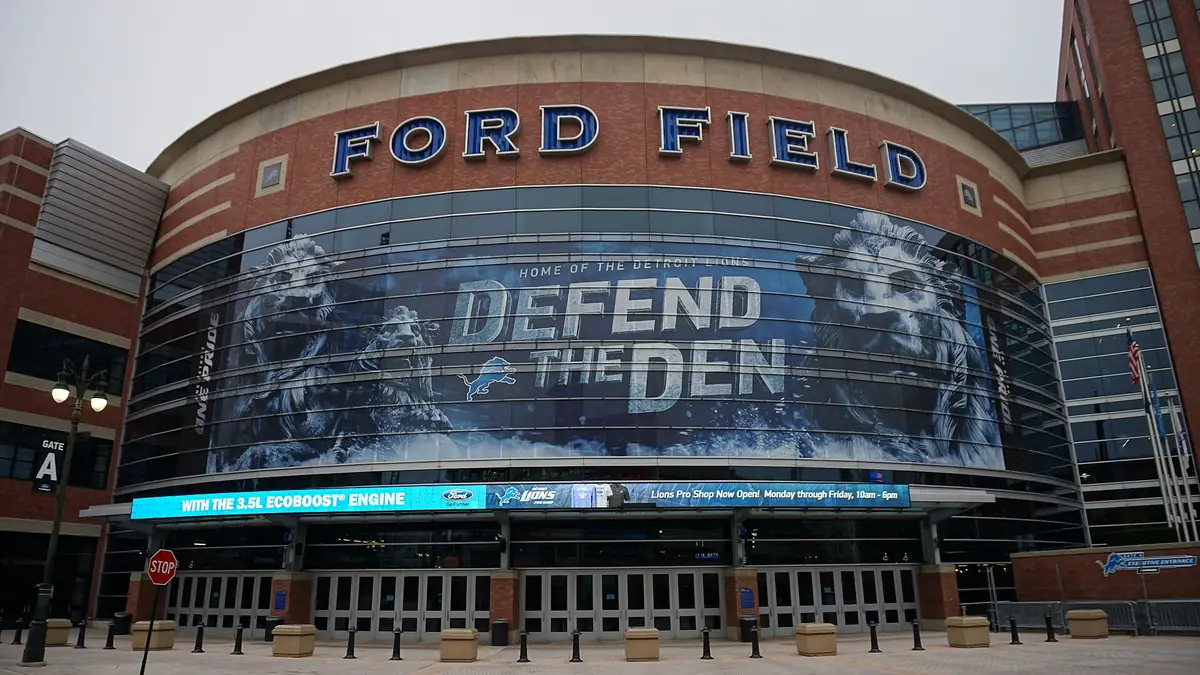
Ford Field is the home of the Detroit Lions, a fixed-dome stadium at 2000 Brush Street in downtown Detroit, across the street from Comerica Park. Its regular capacity is about 65,000, expandable to 70,000 for football and about 80,000 for basketball and other special setups. It opened on August 24, 2002, and the roof means weather never decides a game here, which makes it a reliable winter stop for football, concerts and championships.
The Lions play their home schedule from September into January, including the franchise's Thanksgiving Day game. The rest of the calendar is broad:
- College and high school football: the Mid-American Conference championship game every year since 2004, Michigan's MHSAA state football finals since 2005, and neutral-site college games.
- Championship events: Super Bowl XL in February 2006, the 2009 Final Four and the 2010 Frozen Four. The Final Four is scheduled to return on April 3 and 5, 2027.
- Wrestling, motorsports and concerts: WrestleMania 23 set the building record of 80,103 in 2007, Monster Jam visits regularly, and major stadium tours stop here.
Ford Field seating chart: three levels and a warehouse sideline
Ford Field's seating chart looks lopsided at first, and that is the key to reading it. The south side of the stadium is a former Hudson's department store warehouse, built in the 1920s, which now holds most of the suites and the lounges for the south-side club seats. The bulk of the general seating sits along the north sideline and behind both end zones, and the upper bowl has gaps at the southwest and southeast corners where the warehouse interrupts it.
The levels are numbered in the usual way:
- 100 level: the lower bowl, wrapping the whole field.
- 200 level: the club level, with sideline club seats that include indoor lounge access.
- 300 level: the upper level. On the north side it includes one level of suites and a smaller block of club seating, plus the largest run of standard upper-deck sideline seats in the building.
Two orientation details matter. Ford Field is one of the few NFL stadiums with end zones at the east and west, a layout chosen to fit the warehouse. The playing field also sits about 45 feet below street level, so many fans enter onto a concourse partway up the bowl and walk down to their seats rather than climbing. Seating guides place the Lions' bench on the south, warehouse side, which means most north-side sideline seats look across at the home team.
Best seats for Lions games, concerts and basketball
Football
For most buyers, the best value is a 300-level sideline seat on the north side between the 20-yard lines. Because the south upper bowl is mostly warehouse suites, this is where the stadium concentrates its affordable sideline inventory, and the height gives a clear view of plays developing. In the lower bowl, rows from roughly the middle of the 100 level upward beat the front rows, where players and staff standing on the sideline block part of the field. End-zone seats are good for scoring plays at your end and poor for judging plays at the far goal line.
For an upgrade, the 200-level sideline clubs add indoor lounges, shorter concession lines and a broadcast-style angle. Seating guides also list loge boxes with oversized chairs above sections 213 and 214 and above the south club seats.
Concerts
In a typical end-stage setup, the stage sits at one end of the field and the floor fills with general-admission or reserved seating. The best views are the lower-bowl sideline sections closest to the stage and the front of the floor; the seats directly behind the stage are usually blocked off or sold as limited-view. Upper end-zone seats facing the stage are the cheapest way in but can feel very far away in a building this size.
Basketball
For the 2008 regional and the 2009 Final Four, the court was placed in the middle of the football field rather than at one end. In that layout, lower sideline seats are the clear choice, and upper seats sit a long way from the court. Expect a similar setup for the 2027 Final Four, and check the event's seating map before buying.
Noise
A fixed dome traps sound. A full house for a big Lions game is loud everywhere in the bowl, so families with young children may want ear protection.
Parking at Ford Field and getting downtown
Ford Field sits in the middle of downtown Detroit's sports district, which means plenty of garages and surface lots within walking distance, and heavy traffic on game days.
Parking
Downtown garages and lots around Brush Street, Comerica Park and Greektown sell event parking, and prices climb for Lions games, prime-time kickoffs and big concerts. Book a spot in advance where possible, and arrive early: freeway exits near downtown back up well before kickoff. The Lions publish alternate routes from northbound and southbound I-75 and from the Lodge Freeway (M-10) to help drivers avoid the worst backups.
Transit
- Detroit People Mover: the automated downtown loop stops at Broadway and Grand Circus Park stations, both a short walk from the stadium.
- QLine streetcar: the Montcalm Street stop on Woodward Avenue is close to the stadium.
- Buses: DDOT and SMART routes serve downtown.
On Lions game days, the team runs a pregame Power Hour inside the stadium with discounted concessions, starting at 10:30 a.m. for early kickoffs as of the 2026 season, which is another reason to arrive early and skip the worst of the traffic.
Ford Field bag policy and entry rules (2026 season)
As of the 2026 NFL season, Ford Field follows the NFL clear-bag policy (the league-wide rule that limits what you can carry into a stadium). Under that policy you may bring one clear plastic, vinyl or PVC bag no larger than 12 by 6 by 12 inches, or a one-gallon clear freezer bag, plus a small clutch no larger than about 4.5 by 6.5 inches, which does not need to be clear. Medically necessary items are allowed after inspection.
- Screening: everyone entering goes through a visual inspection, a bag check, a pat-down and walk-through metal detectors.
- Gates: the Lions advise using gates other than Gate A, where long lines form at the corner entrances. A dedicated entrance for Fifth Third card holders is at the north end of Gate A.
- Tickets: Lions tickets are mobile only and scan from your phone's wallet.
- Cashless: Ford Field is a cashless venue that takes cards and mobile payment.
- Smoking: permitted only in the outdoor areas at Gates D and E.
Concerts and other events can set their own rules, so check the venue's current policy on the Ford Field website or the Lions stadium guide before you go. Every GoodSeats order comes with free shipping and no digital transfer fees.
Inside the stadium: light, clubs and food
Unlike most domes, Ford Field lets in a lot of daylight through large skylights and glass walls at the open corners; the frosted ceiling windows are meant to echo Metro Detroit's auto plants. The south entrance gives the concourse a view of downtown. A 100 million dollar renovation in 2017 added new video boards and a new sound system and updated the suites, clubs, restaurants and bars. Club tickets on the 200 level carry lounge access, and the warehouse side holds most of the premium spaces.
How Ford Field came to be
The Lions played at Tiger Stadium until 1974 and at the Pontiac Silverdome, north of the city, from 1975 to 2001. In 1996 the team announced plans to return downtown, and voters approved a stadium referendum that November. Ground was broken on November 16, 1999, as part of a revitalization plan that also produced Comerica Park. Ford Motor Company bought the naming rights for 40 million dollars over 20 years; the Ford family has controlled the Lions since 1964. The stadium has since hosted moments well beyond football, including the 2003 Basketbowl, when 78,129 fans watched Kentucky beat Michigan State, and a pair of Buffalo Bills home games moved here by lake-effect snowstorms in 2014 and 2022.
Frequently asked questions
What is the capacity of Ford Field?
Ford Field seats about 65,000 for football and can expand to 70,000. Special setups have drawn more, including a building record of 80,103 for WrestleMania 23 in 2007.
What is the Ford Field bag policy?
As of the 2026 season, Lions games follow the NFL clear-bag policy: one clear bag up to 12 by 6 by 12 inches or a one-gallon clear freezer bag, plus a small clutch about 4.5 by 6.5 inches. Check the venue's current policy before you go.
Where do you park for a Lions game at Ford Field?
Most fans use downtown garages and surface lots within walking distance, which fill early and cost more on game days. The People Mover and the QLine streetcar are good ways to avoid downtown traffic.
Which side is the Lions sideline at Ford Field?
Seating guides place the Lions' bench on the south side, in front of the old Hudson's warehouse that holds most of the suites. North-side seats face the home sideline across the field.
Does Ford Field have a roof?
Yes. Ford Field has a fixed dome, so games are never affected by weather. Skylights and glass corner walls let in natural light during day events.
Sources
- Wikipedia – Ford Field
- Detroit Lions – Stadium Guide
- Wikipedia – Detroit Lions
- Detroit Lions – Game Day
- Detroit Lions – Traffic and Parking
- Ford Field – FAQs and Guest Help (via project research notes)
- Lumen Field – Clear Bag Policy (NFL policy dimensions)
- RateYourSeats – Ford Field Lions seating (orientation)