







How the college basketball season is built
College basketball tickets follow a calendar with three distinct phases: the regular season on campus from early November, conference tournaments in early to mid-March, and the NCAA tournaments for men and women that run from mid-March to early April. The 2025–26 Division I men's season opened on Monday, November 3, 2025, and the next season follows the same shape.
- Nonconference games (November and December): early-season tournaments, neutral-site showcases and home games against smaller programs. Demand is usually softest here, outside of marquee neutral-site matchups.
- Conference play (late December or January into early March): the league schedule, where rivalries and ranked matchups live. This is when campus arenas sell out.
- Conference tournaments (early to mid-March): each league stages a tournament after its regular season, using the standings for qualification and seeding. The winner earns the league's automatic bid to the NCAA tournament.
- The NCAA tournaments (mid-March to early April): single-elimination brackets known as March Madness, ending at the Final Four.
Women's basketball runs on the same calendar, and its Final Four is played in an arena rather than a football stadium.
March Madness, the Final Four and the 76-team era
The NCAA Men's Basketball Tournament, first held in 1939, is the event most people mean by March Madness. Starting in 2027 both the men's and women's tournaments expand from 68 to 76 teams: 32 automatic bids for conference champions and 44 at-large bids chosen by a selection committee. The opening round grows to 24 teams in 12 games.
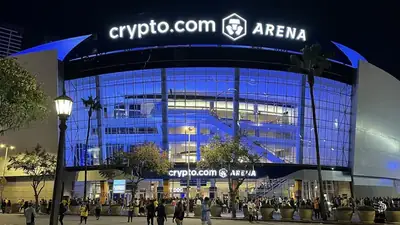
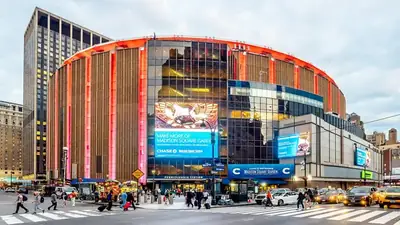
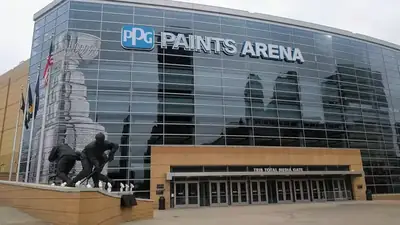
- Men's 2027: opening-round games March 16–17 in Dayton and Wichita; first and second rounds at eight arenas, including PPG Paints Arena in Pittsburgh; regionals in San Antonio, Kansas City, at Crypto.com Arena in Los Angeles and at Madison Square Garden in New York; the Final Four at Ford Field in Detroit on April 3 and 5.
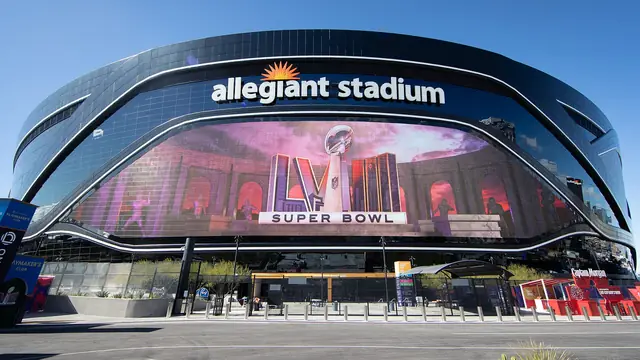
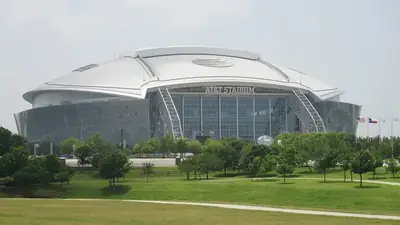
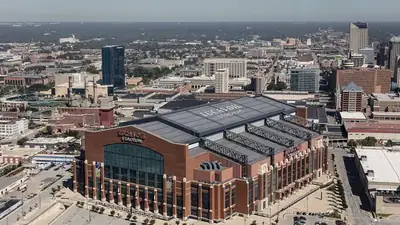
- Future men's Final Fours: Allegiant Stadium in Las Vegas (2028), Lucas Oil Stadium in Indianapolis (2029), AT&T Stadium in Arlington (2030) and Mercedes-Benz Stadium in Atlanta (2031).
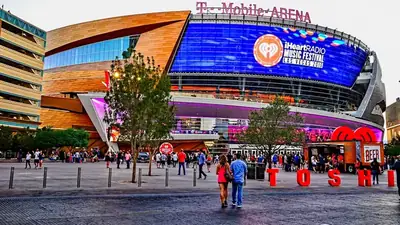
- Women's 2027: the opening round, first round and second round are played at campus sites from March 17 to 22; regionals at Xfinity Mobile Arena in Philadelphia and T-Mobile Arena in Las Vegas; the Final Four at Nationwide Arena in Columbus, Ohio, on April 2 and 4.
Recent champions show how wide the field has become. Michigan beat UConn 69–63 for the 2026 men's title in Indianapolis, and UCLA beat South Carolina 79–51 for the 2026 women's title in Phoenix. On all-time titles, UCLA leads the men's list with 11 and UConn leads the women's list with 12. Crowds keep growing as well: the NCAA reported that the 2025 women's tournament drew 351,777 fans, its third-highest total, while the men's tournament topped 700,000 for a third straight year (NCAA).
Campus arenas with the strongest home atmosphere
The regular season belongs to campus arenas, and the best of them are small, loud and old. A conference game in one of these buildings is often a harder ticket than an early-round NCAA tournament session.
- Cameron Indoor Stadium (Duke, Durham, North Carolina): opened in 1940 with about 9,300 seats. Students camp for weeks in a tent village called Krzyzewskiville for access to the biggest games, especially North Carolina.
- Allen Fieldhouse (Kansas, Lawrence): opened in 1955 and seats about 15,300. It set a Guinness record of 130.4 decibels in 2017, and Kansas has won close to 88 percent of its games there.
- Rupp Arena (Kentucky, Lexington): opened in 1976 and seats about 20,500 after a 2019 renovation replaced upper-level bleachers with chairbacks.
- The Palestra (Penn, Philadelphia): opened in 1927, seats about 8,700 and is still known as the Cathedral of College Basketball. The Philadelphia Big 5 schools play part of their city series there.
Newer buildings matter too. The Moody Center in Austin, opened in 2022, seats 10,763 for Texas Longhorns basketball. For conference-specific detail, see the Atlantic Coast Conference and Southeastern Conference hubs.
How college basketball tickets are sold
College basketball ticketing runs through three layers, and the layer you buy from changes what is available.
- School season tickets: most programs sell full or partial season plans first, with seat location set by a donor priority-point system (a ranking built from annual gifts, years of season-ticket loyalty and alumni status). The best lower-level seats at high-demand programs usually require a booster gift on top of the ticket.
- Student tickets: students get a dedicated allocation, sometimes by lottery, sometimes by attendance points, and at Duke by camping.
- Conference tournament books: leagues sell all-session tickets (one seat for every session) before single-session tickets, and schools receive allocations for their own fans.
- NCAA tournament tickets: all-session tickets for each host site typically go on sale in the fall, single-session tickets follow in winter, and the NCAA runs its own ticket exchange for resale.
Resale fills the gaps: season-ticket holders release seats for games they skip, which is why nonconference games are easy to get and rivalry games are not. In the NCAA tournament, fans of eliminated teams often release seats for later sessions at the same site, so availability can improve after the first game day. Every order on GoodSeats carries a 100% guarantee.
Where to sit for college basketball
Basketball seating is about distance and angle more than level. The court is small, so a seat in the lower half of a campus arena along the sideline is close by any standard.
- Sideline, lower level: the best overall view in any arena. Center-court sections cost the most; sections near the foul line extended give almost the same view.
- Behind the baskets: fine in a small campus gym, weaker in a large arena, where the backboard and stanchion block part of the far end.
- Upper level, sideline: usually the value seat. In a 9,000-seat gym the upper rows are still close; in a 20,000-seat arena, aim for the first rows of the upper deck rather than the corners.
- Near the student section: the loudest seats in the building. Students usually stand the whole game, so families who want to sit may prefer the opposite side.
Final Fours in football stadiums are different. Since 2009 the men's Final Four has required at least 70,000 seats, built by adding floor seating and raising the court on a platform about three feet above the dome floor. Floor seats close to the platform are excellent, but the back half of the flat floor seating looks over many rows of heads. The first tier of stadium seating along the sideline usually sees more of the court than mid-floor rows, and upper-deck seats are far enough away that many fans end up watching the video board.
Conference tournament week
Conference tournaments are the best-value way to see a lot of basketball in a few days. Early-round sessions often include two or more games on a single ticket, and the arenas are neutral ground.
- Big East: Madison Square Garden has hosted the Big East men's tournament since 1983, under a contract that runs through 2028.
- ACC: the men's tournament alternates between the Spectrum Center in Charlotte and the coliseum in Greensboro through 2029; Greensboro has hosted 30 times, more than any other site.
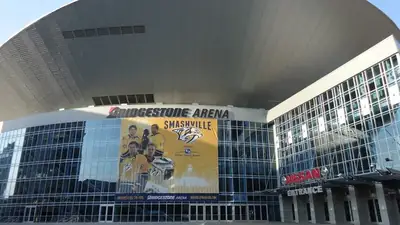
- SEC: Bridgestone Arena in Nashville is the regular home of the men's tournament, with every SEC team in the field.
Three patterns hold almost every year. The opening days are the cheapest sessions. Quarterfinal day, when the top seeds first play, is the deepest card. The semifinals and final draw the most demand, and their prices move with which teams survive.
Tips for your first college basketball game
- Arrive for warmups: student sections and pep bands start early.
- Check the bag policy: as of the 2025–26 season, many arenas and NCAA tournament sites enforce clear-bag rules (bags must be transparent and small); check the venue's current policy before you go.
- Plan for a cashless building: many arenas, including Ford Field for the 2027 Final Four, are cashless.
- Remember the women's game: at many top programs, women's tickets are easier to find and closer to the floor.
- Expect no re-entry: NCAA tournament sessions do not allow re-entry, so plan meals around the full session.
For March Madness logistics, read the NCAA Men's Basketball Tournament page and the NCAA's Final Four fan guide.
Frequently asked questions
When does the college basketball season start and end?
Division I play opens in early November (the 2025–26 men's season tipped off November 3, 2025), conference tournaments run in early to mid-March, and the men's and women's Final Fours are played in early April.
How many teams are in March Madness?
Starting in 2027, both the men's and women's NCAA tournaments expand to 76 teams, with 32 automatic bids for conference champions and 44 at-large bids.
Where is the 2027 Final Four?
The 2027 men's Final Four is at Ford Field in Detroit on April 3 and 5. The 2027 women's Final Four is at Nationwide Arena in Columbus, Ohio, on April 2 and 4.
Are conference tournament tickets sold by session?
Yes. Conferences usually sell all-session tickets first, then single-session tickets, and early sessions often include more than one game.
What are the best seats for a college basketball game?
Lower-level sideline seats give the best view. Upper-level sideline seats are the usual value choice, and seats directly behind the basket in large arenas have partly blocked views of the far end.
Sources
- Wikipedia – NCAA Division I men's basketball tournament
- NCAA.com – Future Final Four sites and 2027 preliminary sites
- NCAA.com – Final Four Know Before You Go
- NCAA Tickets – March Madness tickets
- NCAA.com – 2027 women's tournament schedule
- Wikipedia – NCAA Division I women's basketball tournament
- Wikipedia – 2026 NCAA Division I women's basketball tournament
- Wikipedia – 2026 NCAA Division I men's basketball tournament
- NCAA – Record crowds highlight 2025 NCAA basketball championships (dossier GS-019)
- Warner Bros. Discovery press – 2025–26 season tips off November 3
- Wikipedia – College basketball
- Wikipedia – Cameron Indoor Stadium