.jpg)
Looking for section numbers and the best seats by level? See the Dodger Stadium Seating Chart.
Upcoming events at Dodger Stadium
Dates and live ticket listings appear here as soon as they are on sale. The guide below covers what to know before you buy.
MLB's largest ballpark and the Dodgers' home since 1962
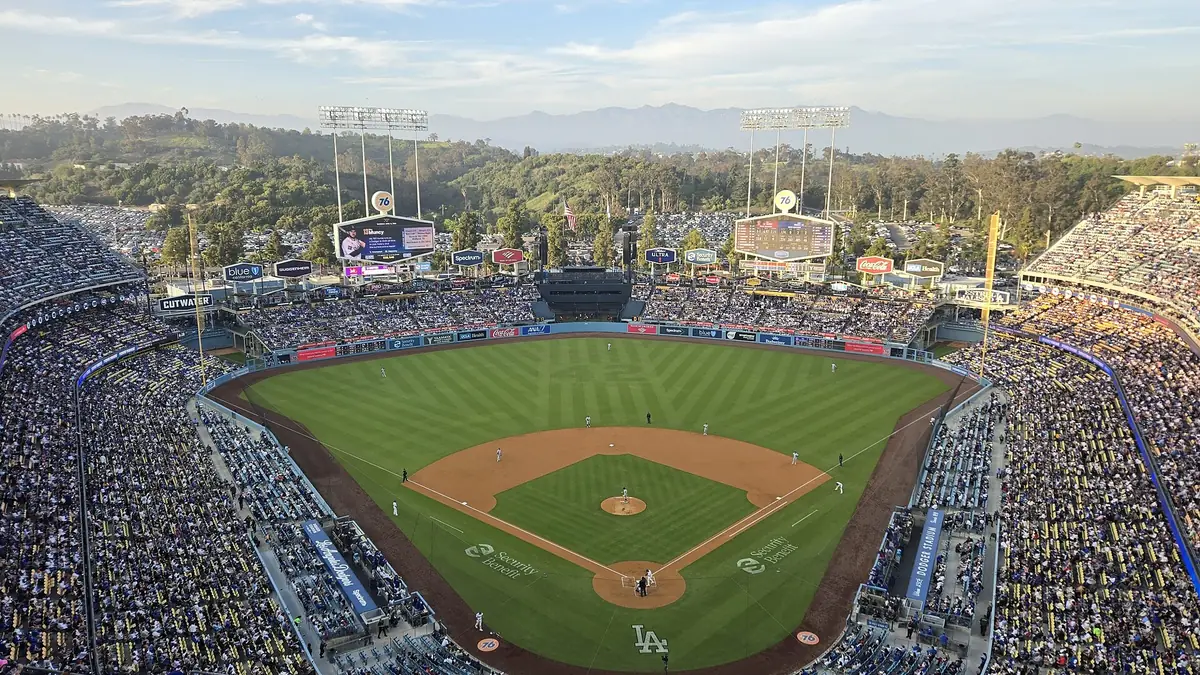
Dodger Stadium is the home of the Los Angeles Dodgers and, at 56,000 seats, the largest ballpark in Major League Baseball by capacity. It opened on April 10, 1962, in Chavez Ravine near Elysian Park, just north of downtown Los Angeles. Only Fenway Park (1912) and Wrigley Field (1914) are older among active MLB parks, which makes it the oldest ballpark west of the Mississippi River.
In March 2026 the Dodgers announced a partnership that named the playing surface UNIQLO Field at Dodger Stadium. The stadium keeps its name, and you will see both on signage and tickets. Beyond the 81-game regular-season home schedule from late March or early April through September, the stadium hosts postseason games in many Octobers, occasional concerts and international events, and it is scheduled to host Olympic baseball in 2028.
Field, Loge, Reserve, Top Deck and the Pavilions
The stadium stacks its seats in distinct tiers, each with its own concourse. From the field up:
- Field Level: the lowest tier, wrapping from foul pole to foul pole, with the premium Dugout Club seats directly behind home plate.
- Loge Level: the first deck above the field, a favorite for its angle on the infield.
- Suite Level (Club): the premium tier between Loge and Reserve.
- Reserve Level: the upper-middle deck, long, with good infield angles.
- Top Deck: the highest tier, with the widest views and the lowest-priced infield seats.
- Left and Right Field Pavilions: the outfield bleachers under the stadium's wavy roofs.
Two design features change how you plan the day. First, the stadium is built into a hillside with terraced parking, so many fans park at roughly the level of their seats and walk straight in. Pick a lot that matches your seat level and you avoid long climbs. Second, the 2020 renovation added a center field plaza with new elevators and escalators connecting the outfield, which made it easier to circulate around the park than in earlier decades.
Best seats, and how to stay out of the sun
Home plate faces north-northeast. That orientation decides comfort at day and twilight games:
- Third-base side: the shade side. It falls into shadow first as the sun moves west, and even when it is still sunny, the sun is behind you rather than in your eyes.
- First-base side and right field: stay sunny the longest, and the right-field seats can catch glare around sunset.
- Covered rows: the last six or seven rows of each Loge section sit under the deck above, and the back rows of the Reserve Level behind home plate are also covered.
For a 7:10 p.m. start, sun is a minor issue almost everywhere. For an afternoon game or an earlier evening start, pay for the third-base side or a covered back row of the Loge. That one choice matters more to your comfort than a few rows of distance.
Where the value is
Infield Loge seats, between the bases, give the best balance of view and price, high enough to read defensive shifts and low enough to see pitch movement. The infield sections of the Reserve Level are the next step down in price with a similar angle. Top Deck seats are high, but the infield view is clean and the backdrop of Elysian Park and the San Gabriel Mountains is part of the appeal.
Seats to reconsider: Field Level seats far down the lines face the outfield, so you spend the game turned toward home plate, and the Pavilions are far from the infield and in direct sun at most day games. The Pavilions do suit fans who want a lively outfield crowd and a shot at home run balls.
Demand patterns
Resale demand peaks for Opening Day, weekend games, fireworks and promotional nights, series against National League West rivals, and the postseason. Midweek games in April, May and early September usually offer the widest choice.
What the game looks like from each deck
From the Field Level, you are close enough to hear the catcher's mitt and to read the infielders' positioning. Since 2005, added field-level seats have shrunk foul territory, putting the first rows unusually close to the action for a park of this era.
The Loge and Reserve levels show the whole diamond, including outfield positioning and baserunners' leads, and they are the best perches for following strategy. From the Top Deck, the field is small but complete, and you look out over the pavilion roofs to the hills beyond. The outfield is symmetrical, a rarity among modern parks, so the view from equivalent seats on each side is very similar apart from sun and shade.
Getting to Chavez Ravine: Express shuttle, parking and rideshare
No rail line reaches the stadium, and the roads into Chavez Ravine back up before most games. Plan to arrive early whichever option you choose.
- Dodger Stadium Express from Union Station: free with a game ticket, with buses every 10 minutes starting two and a half hours before first pitch. The route uses a dedicated bus lane on Sunset Boulevard, which often makes it faster than driving. Return buses run until 45 minutes after the final out.
- Dodger Stadium Express South Bay route: also free with a ticket, serving Harbor Gateway Transit Center and several Harbor Freeway stations every 30 minutes. Both routes drop riders at the center field gates.
- Parking: stadium lots open about two and a half hours before first pitch. Prepaid parking is sold until three hours before the game and costs less than buying at the gate; preferred parking is advance-only. Lots are cashless.
- Rideshare: available, but expect slow exits after the game, when buses and pre-parked cars clear first.
Current routes and lot details are on the Dodgers' Dodger Stadium Express page.
Bags, outside food and gate times, as of 2026
As of the 2026 season, Dodger Stadium allows clear plastic bags up to 12 by 12 by 6 inches and non-clear clutches or wristlets up to about 5 by 8 by 2 inches. Lockers at Lots H and N store larger bags for a fee. The stadium also allows outside food carried in a clear bag of the same size, plus factory-sealed plastic bottles of non-alcoholic drinks of one liter or less. Review the team's stadium policies before you go.
- Gates: stadium gates open about two hours before first pitch.
- Cashless: all purchases are card or mobile pay; kiosks convert cash to prepaid cards at no cost.
- No re-entry once you leave, and no smoking or vaping anywhere on the property.
The center field plaza, opened in 2020, has a children's playground, food stands and the relocated Jackie Robinson statue, and it is a good place to arrive early. Every GoodSeats order comes with guaranteed entry and a 100% guarantee.
Six decades in Chavez Ravine
After moving from Brooklyn, the Dodgers played four seasons, 1958 through 1961, at the Los Angeles Memorial Coliseum while the stadium was built. Ground was broken on September 17, 1959, and the park, designed by Praeger-Kavanagh-Waterbury, cost about 23 million dollars. Its construction followed the forced removal of the mostly Hispanic residents of Chavez Ravine, a history the city still reckons with.
The Los Angeles Angels shared the stadium from 1962 through 1965. Since then it has hosted the World Series 12 times, the All-Star Game in 1980 and 2022, the semifinals and finals of the 2009 and 2017 World Baseball Classics, and a Mass by Pope John Paul II on September 16, 1987. The wavy pavilion roofs and the hillside setting have changed little, and under its permit the stadium has never added to its original 56,000-seat capacity.
Frequently asked questions
What is the capacity of Dodger Stadium?
Dodger Stadium seats 56,000, the most of any Major League Baseball ballpark.
Which side of Dodger Stadium is in the shade?
The third-base side falls into shade first during day games. The covered back rows of the Loge Level and the back rows of the Reserve Level behind home plate also offer cover.
How does the Dodger Stadium Express work?
The Dodger Stadium Express is a free shuttle for ticket holders from Union Station, every 10 minutes starting two and a half hours before first pitch, with a second route from the South Bay. Both drop off at the center field gates.
Can you bring food into Dodger Stadium?
Yes, as of 2026, outside food is allowed in a clear bag up to 12 by 12 by 6 inches, along with factory-sealed plastic bottles of non-alcoholic drinks of one liter or less. Check the current policy before your game.
Is Dodger Stadium the oldest ballpark in MLB?
It is the third-oldest active MLB ballpark, after Fenway Park and Wrigley Field, and the oldest west of the Mississippi River.
What is UNIQLO Field at Dodger Stadium?
It is the name of the playing field under a partnership announced in March 2026. The stadium itself is still called Dodger Stadium.