.jpg)
Looking for section numbers and the best seats by level? See the TD Garden Seating Chart.
Upcoming events at TD Garden
Dates and live ticket listings appear here as soon as they are on sale. The guide below covers what to know before you buy.
Boston's arena for the Bruins and Celtics
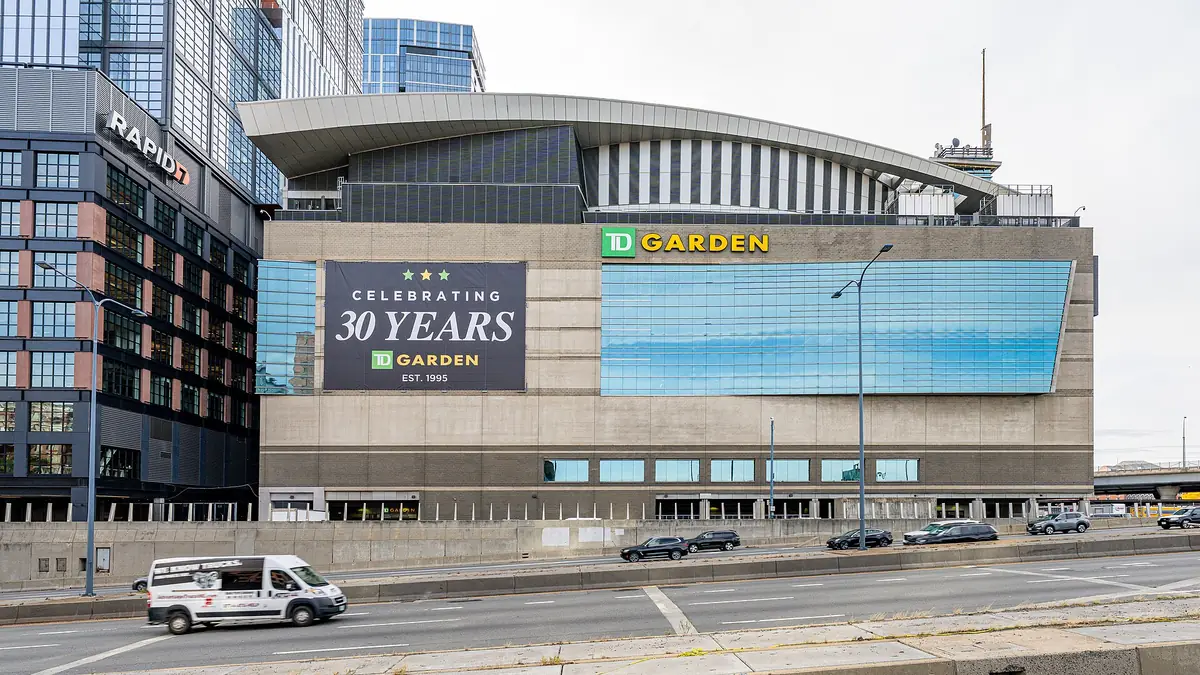
TD Garden is the indoor arena near Boston's West End and North End where the Boston Bruins (NHL) and the Boston Celtics (NBA) play their home games. It holds 17,850 for hockey, 19,156 for basketball and about 20,000 for concerts, and it hosts major touring shows, college tournaments and family events throughout the year.
The arena opened on September 30, 1995, at 100 Legends Way, replacing the original Boston Garden next door. It is built directly on top of North Station, so the subway and commuter rail stop is underneath the building. Delaware North owns the arena. It has carried several names: Shawmut Center during construction, FleetCenter from 1995 to 2005, TD Banknorth Garden from 2005 to 2009, and TD Garden since.
Because hockey and basketball seasons overlap from October through April, and the playoffs can stretch into June, the Garden often has a game or event several nights a week.
Loge, club and Balcony: the layout explained
The Garden uses its own names for its levels, which can confuse first-time buyers.
- Loge (sections 1 to 22, on Level 4): the lower bowl. Most Loge sections start at courtside or glass-side rows lettered AA, A, B and C, and then switch to numbered rows.
- Club seats: a premium band at the back of the lower bowl on both sides, with padded seats, in-seat service and access to the 1928 Club lounge at Bruins and Celtics games.
- Balcony (sections 301 to 330, on Level 7): the upper bowl, which is steep and stacked rather than set far back.
- Promenade: standing-room areas sold for some events.
- Floor: temporary floor sections for concerts, either reserved or general admission depending on the show.
Seating guides place the Celtics bench in front of Loge section 22 and the visitors' bench in front of section 2. For hockey, the Bruins shoot twice toward the end of the rink with sections 3 to 10, according to the same guide.
Where to sit for Bruins and Celtics games
Hockey
For a Bruins game, center-ice Loge seats a dozen or more rows up are the classic choice. That height lets you see plays develop across the whole sheet of ice, while the first few rows against the glass feel close but distort the view of the far end. If you like to watch the Bruins on the attack, buy at the end where they shoot twice (sections 3 to 10 in the guides), which also gives you two periods of action in front of you.
Basketball
For the Celtics, sideline Loge seats between the baskets are the best views in the building. Corner Loge seats are a good value, since basketball sightlines from the corners are better than in football or hockey. Courtside rows are the scarcest and most expensive seats, because the parquet floor and the bench are right in front of you.
The Balcony
The Balcony is steep, which works in its favor: front Balcony rows at center ice or center court look straight down on the action and are a strong value. The upper rows of the Balcony corners and ends are the most distant seats, and for basketball they are the least satisfying. For both sports, a front-row Balcony seat at center is often a better view than a high Loge seat behind a basket.
Concerts and other events at the Garden
Most concerts use an end-stage setup with floor sections (often lettered) in front of the stage. The lower Loge sections along the sides nearest the stage give a raised, angled view that many fans prefer to the rear floor, where the floor is flat and the view depends on the crowd in front of you. Floor seats can also be partly blocked by sound and lighting towers, so check for limited-view notes on the listing.
Seats directly beside or behind the stage are usually sold only when a show is built for them. For in-the-round productions, sideline Loge and front Balcony seats become strong choices.
Getting there: North Station and parking
The Garden is one of the easiest major arenas in the country to reach by transit.
- Subway: the MBTA Green Line and Orange Line both stop at North Station. Go upstairs and cross Causeway Street, or use the underground passage, to reach the arena. The last Green and Orange Line trains leave North Station around 12:45 a.m.
- Commuter rail: North Station's commuter rail platforms are directly below the arena concourse.
- Parking: the North Station Garage sits beneath the arena, with entrances at 121 Nashua Street and 140 Causeway Street. Event parking can be bought in advance, which guarantees a space. The garage's maximum vehicle height is 6 feet 8 inches.
See the MBTA's TD Garden page for current service.
Doors, bags and arena rules
As of the 2025–26 season, the arena lists these rules. Check the venue's current policy before you go.
- Bags: only small bags, clutches, crossbodies and wristlets no larger than 6 by 4 by 1.5 inches, with exceptions for diaper bags and medical bags. A paid event bag check is available nearby.
- Doors: for Bruins and Celtics games, member entrances open two hours before game time and general doors one hour before. Concerts usually open one hour before the event.
- Tickets: mobile only, with a rotating barcode; screenshots and printouts are not accepted.
- Re-entry: strictly not allowed.
- Payment: cash-to-card arena, so plan to pay by card or phone.
The small-bag limit is much stricter than at most stadiums. If you are coming straight from work with a backpack, plan to leave it elsewhere.
Food, the Sports Museum and Garden history
Premium dining includes Legends, a members-only restaurant that opens two hours before games, and the Rafters premium area. The Sports Museum, on Levels 5 and 6, covers Boston sports history and offers guided tours.
The current arena cost about 160 million to build and has been renovated several times, most recently with the Hub Vision center-hung scoreboard before the 2021–22 season. It has hosted the NBA Finals, the Stanley Cup Final, NCAA tournament games and the 2004 Democratic National Convention, and the Celtics play on their trademark parquet floor, one of only two in the NBA.
Frequently asked questions
What is the capacity of TD Garden?
TD Garden seats 17,850 for hockey, 19,156 for basketball and about 20,000 for concerts.
What is the difference between Loge and Balcony at TD Garden?
Loge is the lower bowl, sections 1 to 22 on Level 4. Balcony is the upper bowl, sections 301 to 330 on Level 7.
What is the bag policy at TD Garden?
As of the 2025–26 season, bags may be no larger than 6 by 4 by 1.5 inches, with exceptions for diaper and medical bags. Check the arena's current policy before you go.
How do you get to TD Garden on the T?
Take the Green Line or Orange Line to North Station, which sits directly beneath the arena. Commuter rail trains also arrive at North Station.
Is there parking at TD Garden?
Yes. The North Station Garage is directly beneath the arena, and event parking can be reserved in advance.
What was TD Garden called before?
It opened in 1995 as the FleetCenter, became TD Banknorth Garden in 2005 and TD Garden in 2009. During construction it was called the Shawmut Center.