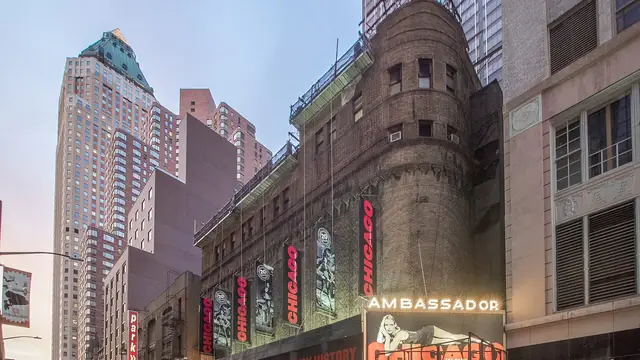
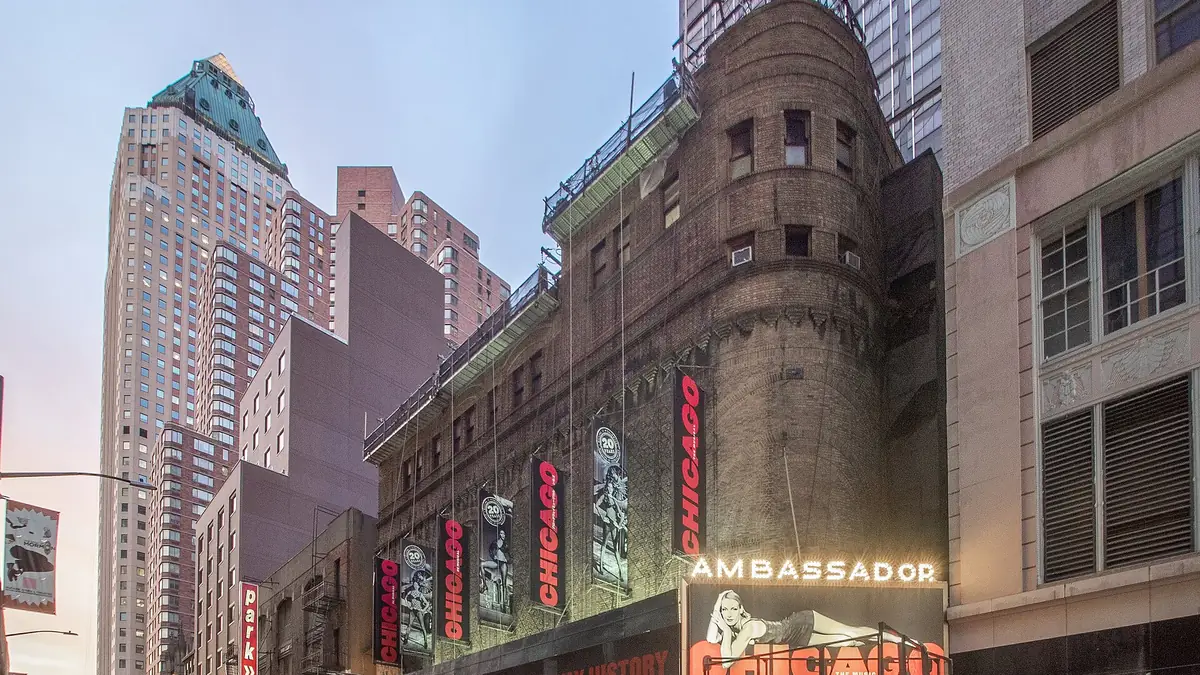
.jpg)
Upcoming Chicago the Musical dates
Dates and live ticket listings appear here as soon as they are on sale. The guide below covers what to know before you buy.
What Chicago is, and why it has run so long
Chicago is a jazz-age musical about two murderesses, Roxie Hart and Velma Kelly, who turn their trials into a bid for celebrity with the help of a smooth defense lawyer, Billy Flynn. The current Broadway production is the 1996 revival, which has played at the Ambassador Theatre on West 49th Street since January 2003. The production bills itself as the longest-running American musical in Broadway history, and it is the second-longest-running show of any kind on Broadway, having passed Cats on November 23, 2014. It has given more than 11,000 performances.
John Kander wrote the music and Fred Ebb the lyrics, and Ebb and Bob Fosse wrote the book. The story comes from Maurine Dallas Watkins's 1926 play, which she based on real 1924 murder trials she covered as a Chicago reporter. The songs are the draw: All That Jazz, Cell Block Tango, Razzle Dazzle, Mister Cellophane, We Both Reached for the Gun and Nowadays.
From Fosse's 1975 original to the 1996 revival
The original production opened on June 3, 1975, at the 46th Street Theatre, staged by Fosse with Gwen Verdon as Roxie, Chita Rivera as Velma and Jerry Orbach as Billy. It ran 936 performances, closing in August 1977. That is a respectable run, but nothing like what came later.
The revival grew out of a May 1996 concert staging in New York City Center's Encores series. Director Walter Bobbie and choreographer Ann Reinking, working in the style of Fosse, kept the stripped-down concert look and moved it to Broadway, where it opened at the Richard Rodgers Theatre on November 14, 1996, with Reinking, Bebe Neuwirth, James Naughton and Joel Grey. It won six Tony Awards, including Best Revival of a Musical, more than any revival before it. It moved to the Shubert Theatre in February 1997 and to the Ambassador Theatre on January 29, 2003. The 2002 film version won the Academy Award for Best Picture.
What the staging looks like
This is not a big-set show. The band sits center stage on a tiered bandstand that suggests a jury box, and the actors play scenes around and on top of it. Performers not in a scene often sit in chairs at the sides of the stage. John Lee Beatty designed the spare set, William Ivey Long the black costumes and Ken Billington the lighting.
That design matters for seat choice. There is no scenery to be blocked, no flying effects to see from above, and no revolve. What you are watching is dance, faces and the band, so closeness and a centered angle count for more than height.
Runtime, age guidance and content notes
Chicago runs 2 hours and 30 minutes, including a 15-minute intermission. The production recommends it for ages 12 and up, and herbal cigarettes are smoked on stage.
The age guidance is sensible. The show is built on murder, adultery, a corrupt justice system and frank, suggestive choreography, all played as dark comedy. Teenagers who know the film usually enjoy it; younger children tend to find long stretches of it puzzling.
Best seats at the Ambassador Theatre for Chicago
The Ambassador Theatre opened in 1921 and is unusual among Broadway houses: architect Herbert J. Krapp set the auditorium on a diagonal across its nearly square lot to fit in more seats. The Shubert Organization lists 1,114 seats: 573 in the orchestra, 264 in the front mezzanine and 250 in the rear mezzanine, plus 8 box seats. The diagonal layout means the side sections angle toward the stage more than in a conventional house, but the extreme ends of wide rows still see the stage at a slant.
Orchestra
Center orchestra from roughly the fifth to the fifteenth row is the strongest place for this show. You are close enough to read the actors' faces and the precision of the Fosse-style movement, which is the point of the show, and the band sits right in your line of sight. The front rows are very close and slightly low; a few rows back gives a cleaner view of dancers' feet and the full width of the stage.
Front mezzanine
The front rows of the front mezzanine, center, are a good alternative and often a better choice than the rear orchestra. The higher angle shows the choreography's patterns across the stage, and because there is no tall scenery, nothing gets cut off.
Where to be careful
- Rear mezzanine: far from a show that depends on faces and small gestures; acceptable for a first look, but this production loses more at distance than spectacle-driven shows do.
- Box seats: sharply angled toward the stage and partial-view for parts of the action.
- Far side seats in long orchestra rows: the slant cuts off part of the bandstand and the opposite edge of the stage.
For more on judging partial views, see Obstructed and Limited View Seats.
Demand patterns and planning tips
After three decades, Chicago behaves differently from a new hit. In most weeks of the year there is a broad choice of seats, and the show is often one of the easier Broadway tickets to buy on short notice. Demand rises at Thanksgiving, through the Christmas and New Year's holiday weeks, on spring-break weeks and on summer Saturdays, when tourist traffic in New York City peaks.
- Celebrity casting: the production periodically casts well-known performers for limited stints (in fall 2026, Reece Weaver through November 1), and those stints can push demand up on specific dates. Check the official site for who is in the cast before you buy.
- Best selection: midweek evenings and matinees outside holiday weeks.
- Accessibility: as of 2026, wheelchair seating is in the orchestra only, the side entrance is step-free, and the mezzanine is up two flights of stairs with no elevator, according to the Shubert Organization's Ambassador page.
Every GoodSeats order is backed by a 100% guarantee. For timing advice, see When Do Ticket Prices Drop?
Getting to the Ambassador Theatre
The theater is at 219 West 49th Street, between Broadway and Eighth Avenue, in the northern part of the Theater District. The closest subway stops are 49 St on the N, R and W lines, 50 St on the C and E lines, and 47–50 Sts–Rockefeller Center on the B, D, F and M lines. Allow extra time on weekend evenings, when sidewalks around Times Square slow to a crawl before curtain. Productions of the musical also tour in the UK and abroad; the official Chicago site lists current companies.
Frequently asked questions
How long is Chicago on Broadway?
2 hours and 30 minutes, including a 15-minute intermission.
What age is Chicago appropriate for?
The production recommends ages 12 and up. The show deals with murder, adultery and corruption, and the choreography is suggestive.
Where is Chicago playing on Broadway?
At the Ambassador Theatre, 219 West 49th Street, where the revival has played since January 2003.
Is Chicago the longest-running Broadway show?
No. It is the longest-running American musical and the second-longest-running Broadway show overall; it passed Cats in November 2014. The Phantom of the Opera holds the overall record.
Is the mezzanine at the Ambassador Theatre good for Chicago?
The front mezzanine, center, is a strong choice because the set is minimal and nothing blocks the stage. The rear mezzanine is far from a show that depends on faces and dance detail.