
Upcoming MLB Opening Day dates
Dates and live ticket listings appear here as soon as they are on sale. The guide below covers what to know before you buy.
When MLB Opening Day happens and what it includes
Opening Day is the first day of Major League Baseball's regular season, and since 2023 it has fallen on the last Thursday of March. Before that, it usually came in the first week of April. MLB reserves the name for the first day on which multiple games are played, so a stand-alone night game or an overseas series that starts the season a few days earlier is an opener but not, officially, Opening Day.
The recent pattern shows how the day is built:
- 2023: all 30 teams played on Thursday, March 30, the first time every club opened on the same day since 1968.
- 2024: 28 teams opened on Thursday, March 28, after the Dodgers and Padres played two games in Seoul on March 20.
- 2025: 26 teams opened on Thursday, March 27, after the Dodgers and Cubs played in Tokyo on March 18.
- 2026: the season opened across three days, starting with the Yankees at the Giants on March 25, then 11 games on March 26 and three more on March 27.
For a ticket buyer, the distinction that matters is between Opening Day and your team's home opener (its first game in its own ballpark). Half the league starts on the road, so many home openers fall several days to a week after Opening Day. Check which date your team is actually at home before you buy.
Why a home opener sells differently from a regular game
A home opener is one of the few regular-season games that feels like an event, and the ticket market treats it that way. Several things drive demand:
- Full introductions. It is the only regular-season game where both teams' entire rosters, coaches and clubhouse staff are introduced to the crowd. Every other night of the year, the ballpark introduces only the starting lineups and managers.
- The ace starts. Managers usually hand the Opening Day start to the best pitcher on the staff, and starting the opener is treated as an honor on both sides.
- Ceremony. Openers typically bring appearances by retired players, local celebrities media personalities and dignitaries, and some broadcasters serve as master of ceremonies.
- The weekday-afternoon factor. Many home openers are played on a weekday afternoon, which is why the day has a long reputation as a reason to skip work or school.
Season-ticket holders get first claim on most of the seats, so the general public largely buys through team presales and the resale market. Expect the opener to command more than the games right after it. The second and third games of the opening homestand, often played in the same week against the same opponent, are usually far easier to get into and can be the better value if the ceremony is not the point.
Where to sit for Opening Day ceremonies
Your seat choice on Opening Day depends on what you came to see. The pregame is part of the show, and it plays out on the field, not on the scoreboard.
- Infield, lower level. Seats between the dugouts give the best view of the baseline introductions, when players line the first- and third-base lines. These are the most contested seats of the day.
- Behind your team's dugout. Fans who want to see players up close during introductions and warmups often target the sections behind the home dugout. Confirm which side is home at your ballpark before choosing.
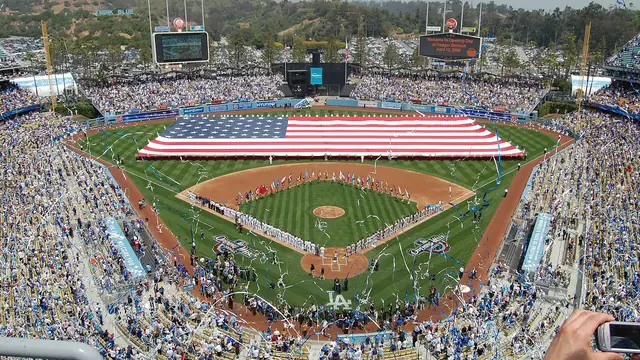
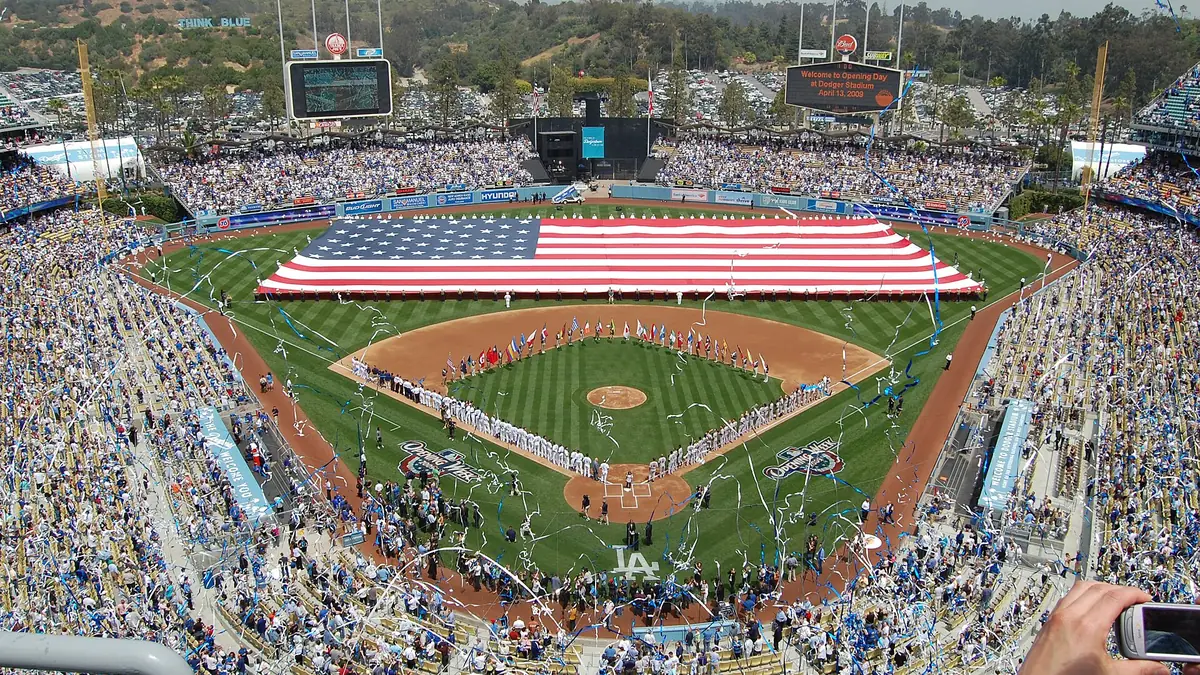
- Upper deck behind home plate. This is the best angle for flyovers, a field-sized flag unfurl and any on-field formation. It is also a sensible budget seat, since sightlines down onto the infield stay clean.
- Outfield and bleachers. The atmosphere is loud and social, but you see the introductions from far away and, at many parks, at an angle.
Arrive when gates open. Most of what makes the day distinct happens before the first pitch, and fans who walk in at game time miss it.
Weather, sun and what late March is actually like
Opening Day is the coldest date on most teams' calendars, and the weather shapes the experience more than at any game in summer.
- Northern open-air parks. A late-March afternoon at an outdoor ballpark in the Midwest or Northeast can be raw and windy. Layers, a hat and gloves are reasonable. Seats in the sun are worth seeking out in March, the reverse of July.
- Rainouts. Early-season weather postpones games. In 2018, two of the scheduled Opening Day games were rained out and moved to the next day. Know your ticket's rain policy before you go.
- Roofed and warm-weather parks. Retractable-roof stadiums and parks in the South and West take most of the guesswork out of an early-season date.
Bag-size limits and mobile-ticket rules differ from ballpark to ballpark and change between seasons, so check your ballpark's current policy before you go.
Cincinnati and the traditions of the first game
Cincinnati is the spiritual home of Opening Day. It was home to the sport's first all-professional team, and for decades the first pitch of each major league season was thrown there. The Reds remain the only team scheduled to open every season at home. Since 1900 the exceptions have been 1966, after rain washed out the opening series, and 1990 and 2022, when lockouts reshaped the schedule.
The city's Findlay Market Parade turns the opener into an unofficial civic holiday, with locals taking the day off to celebrate before the game. For a fan who wants the most traditional version of the day, a Reds home opener is the clearest choice.
The ceremonial first pitch has its own history. Twelve U.S. presidents have thrown out the first pitch of a season, starting with William Howard Taft at the Washington Senators' opener on April 14, 1910. Bill Clinton used the 1994 opener to christen Cleveland's new ballpark, and George W. Bush opened Nationals Park in Washington on March 30, 2008.
Memorable Opening Days
The first day of the season has produced a short list of moments that baseball fans still cite:
- 1940: Bob Feller of Cleveland threw a no-hitter against the White Sox, still the only no-hitter in Opening Day history.
- 1950: the St. Louis Cardinals became the first team to open at home with a night game.
- 1974: Hank Aaron hit his 714th home run on Opening Day in Cincinnati, tying Babe Ruth's career record.
- 2012: Toronto beat Cleveland in 16 innings, the longest Opening Day game in major league history.
- 2018: Matt Davidson of the White Sox hit three home runs in the opener at Kansas City.
Tom Seaver holds the record for Opening Day starts by a pitcher, with 16. The Houston Astros won 10 straight openers from 2013 to 2022, matching a record set in the 1880s and 1890s.
Frequently asked questions
When is MLB Opening Day?
Since 2023, Opening Day has fallen on the last Thursday of March. MLB publishes each season's schedule in advance, and some teams play international or stand-alone games a few days earlier.
Is Opening Day the same as my team's home opener?
Not always. About half the teams open on the road, so their first home game can come several days later. Check your team's schedule for its home opener date before buying.
Why are home opener tickets in higher demand?
The home opener is the only regular-season game with full-roster introductions, it usually features each team's top starting pitcher, and clubs add ceremonies. Season-ticket holders also take much of the supply.
Which team always opens at home?
The Cincinnati Reds are the only team scheduled to open every season at home, a tradition tied to the city's role as the home of the first all-professional team.
What should I bring to an early-season game?
At open-air parks in cooler cities, dress in layers and bring a hat and gloves. Check your ballpark's current bag and mobile-ticket policy before you go.