.jpg)
Upcoming World Series dates
Dates and live ticket listings appear here as soon as they are on sale. The guide below covers what to know before you buy.
The Fall Classic in brief
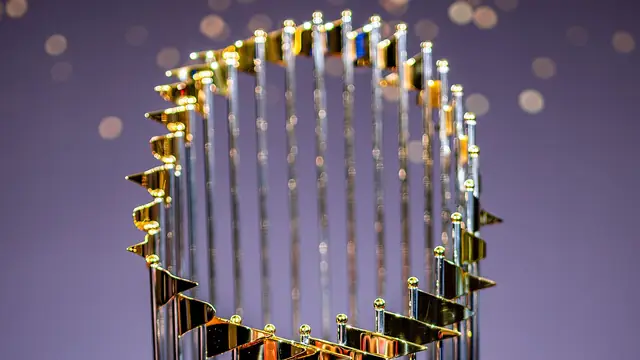
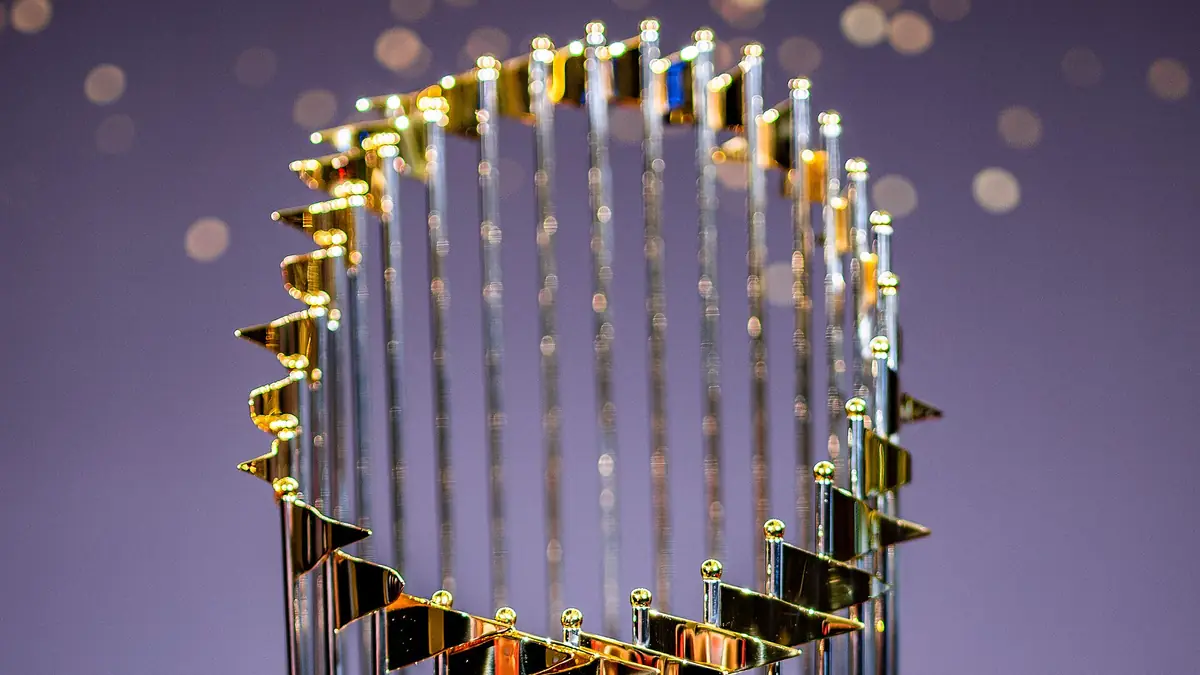
The World Series is Major League Baseball's championship: a best-of-seven series between the American League and National League pennant winners, with the first team to four wins taking the Commissioner's Trophy. It is played in the two teams' home ballparks, traditionally in late October and sometimes into early November, which is why it is called the Fall Classic.
There is no fixed host city. Twelve teams, six per league, reach the postseason, and the two league champions are known only a few days before Game 1. That shapes everything about buying tickets: the matchup, the ballparks and the dates are all set late, and sales move fast once they are.
Format, home field and if-necessary games
The series follows a 2-3-2 home pattern: the team with home-field advantage hosts Games 1 and 2, the other team hosts Games 3, 4 and 5, and the series returns for Games 6 and 7 if needed. Since 2017, home-field advantage goes to the pennant winner with the better regular-season record, with head-to-head record and then division record as tiebreakers. From 2003 to 2016 it went to the league that won the All-Star Game, and before that it alternated by league.
Games 5, 6 and 7 are labeled "if necessary," because a sweep ends the series after four games. Teams sell these tickets in advance and refund them if the game is not played; one club's postseason terms, for example, post refunds automatically to the original card for single-game buyers and credit season-ticket accounts instead. The refund on a resale purchase is handled by the marketplace, so read its policy on unplayed games before buying a Game 6 or Game 7 ticket.
All modern World Series games are played at night for the television audience; the last daytime game was Game 6 in 1987, indoors at the Metrodome.
How tickets go on sale
Each participating club sells its own home games, so there is no single central sale. MLB's postseason ticket page links to each team's sales and its postseason terms. The usual structure looks like this:
- Season-ticket holders and club members first. Teams sell postseason seats to their full-season holders and membership programs before anyone else, often as strips of tickets covering every potential home game.
- Limited public sales next. Whatever remains goes to the public, often through registration or presale windows announced only days ahead, with tight per-order limits.
- Resale for most fans. With so much of each ballpark already held by season-ticket holders, the secondary market is where most fans find World Series seats.
Face value is set by the team and printed on the ticket; resale prices float with demand and can sit well above face value. The live listings on this page cover whichever teams are playing.
Which games draw the most demand
Demand is not even across a series. A few patterns repeat:
- A potential clinching game is the most sought-after ticket in baseball. Game 7 is the extreme case, but any game where one team can win the title sees demand jump as soon as the scenario is set.
- Game 1 carries pent-up demand from the home market after the league championship series.
- A long title drought or a first-ever appearance can drive prices far above normal levels, as can two large markets meeting, such as the Yankees and Dodgers in 2024.
- Ballpark size matters. Smaller parks have fewer seats to go around.
Prices often move hour to hour as series scores change. Buying early locks in a seat but risks an if-necessary game that is never played; buying late can mean higher prices if a clincher is on the line.
Where to sit at a World Series game
Seating judgment at a Fall Classic game is the same as at the ballpark in the regular season, with two October-specific factors: the cold and the crowd.
- Infield, lower level: the seats between the dugouts give the best view of pitch location and plays at the bases, and they are the most expensive in every park.
- Upper deck behind home plate: often the best value for seeing the whole field and how defensive alignments shift.
- Outfield and bleachers: the loudest sections and a good choice for atmosphere, though you lose depth perception on pitches.
- Weather: night games in late October can be cold in northern and open-air ballparks. Upper decks feel the wind more; dress in layers.
For park-specific advice, see the venue guides for the finalists' ballparks, such as Dodger Stadium and Yankee Stadium. Every GoodSeats order is backed by a 100% guarantee.
History and recent Series
The modern World Series began in 1903. It was not held in 1904, when the New York Giants refused to play, or in 1994, when a players' strike canceled the postseason. The New York Yankees have won it more than any other club, with 27 titles, and the Yankees and Dodgers have met 12 times, more than any other pairing.
Recent results:
- 2020: Los Angeles Dodgers over the Tampa Bay Rays, at a neutral site, Globe Life Field.
- 2021: Atlanta Braves over the Houston Astros.
- 2022: Houston Astros over the Philadelphia Phillies.
- 2023: Texas Rangers over the Arizona Diamondbacks, the Rangers' first title.
- 2024: Los Angeles Dodgers over the New York Yankees.
- 2025: Los Angeles Dodgers over the Toronto Blue Jays, decided in 11 innings of Game 7.
Frequently asked questions
When is the World Series played?
Traditionally in late October, sometimes running into early November. Exact dates follow MLB's postseason schedule, and the two teams are known only a few days before Game 1.
Where is the World Series held?
In the home ballparks of the two pennant winners, using a 2-3-2 pattern. The team with the better regular-season record hosts Games 1, 2, 6 and 7.
What happens to tickets for games that are not played?
Games 5, 6 and 7 are if-necessary games. Teams refund unplayed games under their postseason terms; for resale purchases, check the marketplace's policy on canceled or unplayed games.
How do teams sell World Series tickets?
Each club sells its own home games, usually to season-ticket holders and members first, then in limited public sales. Most fans buy on the resale market.
Which team has won the most World Series?
The New York Yankees, with 27 championships.